Introduction to Two Shot Overmolding
Overmolding is a widely used manufacturing process in the plastic injection molding industry. It involves the process of adding a second layer of material, often a different polymer or rubber, over an existing substrate. This technique is employed to enhance the functionality, durability, and aesthetics of a product.
Among the various types of overmolding, Two Shot Overmolding stands out due to its ability to combine two different materials into a single, fully integrated part during the same molding process.
Two-shot overmolding, also referred to as dual-material overmolding or two-shot injection molding, is a sophisticated technique that allows engineers to create complex parts with multiple material properties, all while eliminating secondary assembly steps.
This article provides an in-depth explanation of two-shot overmolding, exploring its benefits, design considerations, applications, and step-by-step process. We’ll also highlight the key factors engineers need to consider when designing parts using this advanced molding method.
What is Two-Shot Overmolding?
Two-shot overmolding is an advanced molding process that combines two different materials in two distinct injection phases. Unlike traditional single-shot molding, which uses a single material, two-shot molding involves injecting one material, followed by a second injection of a different material into the same mold. This process results in a multi-material component that is fully integrated, with both materials bonded together seamlessly.
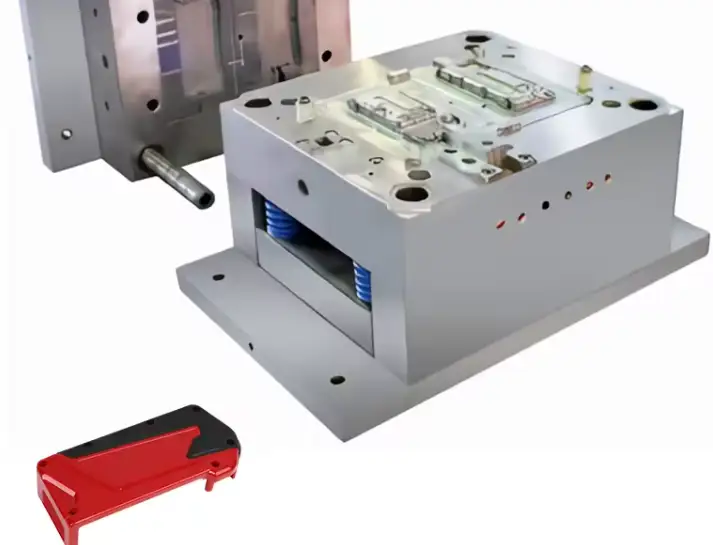
The two-shot molding process is ideal for parts that require multiple material properties, such as flexibility and rigidity, all within one single part. The ability to use two materials with different physical properties enables manufacturers to design parts that provide enhanced functionality, aesthetics, and durability.
Key Features of Two Shot Overmolding
- Multiple Materials: The process allows for the integration of two different materials, often chosen for their complementary properties.
- One Molding Cycle: Despite using two different materials, the part is completed in a single molding cycle, minimizing labor and assembly costs.
- Improved Bonding: The two materials bond together during the injection process, resulting in a strong, durable part without the need for additional assembly or adhesives.
- Complex Geometries: Two-shot molding allows for the creation of parts with intricate designs that would otherwise require multiple manufacturing steps.
The Two-Shot Overmolding Process: A Step-by-Step Guide
The two-shot overmolding process involves several key steps, each critical to achieving a successful, multi-material part. Below is a breakdown of the typical process:
1. Mold Design and Preparation
The first step in two-shot overmolding is designing the mold. Engineers must design a mold that accommodates both materials and ensures proper material flow. The mold is typically divided into two sections: the first cavity for the initial material and the second cavity for the overmolded material.
- Material Compatibility: The materials used in two-shot overmolding must be compatible to ensure they bond together during the injection process.
- Mold Features: The mold needs to have features such as multi-injection gates and the ability to handle different injection pressures and temperatures for each material.
2. First Material Injection
In the first phase of the process, the first material is injected into the mold cavity. This material is usually a rigid thermoplastic, such as ABS, polycarbonate, or polypropylene, and forms the base of the part.
- Injection: The first material is injected into the mold under high pressure, filling the cavity and forming the base part.
- Cooling: After the first material is injected, it is allowed to cool and solidify to a certain degree before moving on to the second injection phase.
3. Mold Switching and Overmolding
Once the first material has cooled sufficiently, the mold is opened, and the part is rotated or repositioned to expose the first material. The second material, often a soft thermoplastic elastomer (TPE), silicone, or rubber, is then injected into the mold cavity, surrounding the first material.
- Overmolding Injection: The second material is injected into the mold, where it bonds chemically or mechanically to the first material.
- Mold Closure: The mold is closed again to allow the second material to cure and solidify, completing the two-shot overmolding process.
4. Cooling and Ejection
Once both materials have been injected and the overmold has cured, the part is cooled to solidify the final design. After cooling, the part is ejected from the mold.
- Final Product: The result is a single, multi-material component that features both a rigid base and a flexible, ergonomic outer layer.
- Inspection: After the part is ejected, engineers will typically perform quality control checks to ensure the bonding and material integrity meet specifications.
Benefits of Two Shot Overmolding
Two-shot overmolding offers several benefits, particularly in applications that require multi-material parts with varying properties. Below are the key advantages of using two-shot molding:
1. Cost Efficiency
Two-shot overmolding is a cost-effective solution because it eliminates the need for secondary assembly or adhesive bonding processes. With both materials being injected in one cycle, the cost of manual labor and additional manufacturing steps is reduced.
2. Enhanced Durability
The dual-material process allows for stronger and more durable parts. The materials used in two-shot molding can be selected to offer specific properties such as high tensile strength, impact resistance, or chemical resistance, making them ideal for harsh environments.
3. Complex Part Design
Two-shot molding enables the production of complex geometries and intricate designs, often integrating different textures, colors, and material properties in a single part. This makes it particularly valuable for products that require both structural strength and user comfort.
4. Improved Aesthetics
The ability to use multiple materials with different colors and textures allows manufacturers to create aesthetically pleasing designs. This is particularly useful in industries such as consumer electronics, automotive, and medical devices, where the look and feel of the product are critical.
5. Design Flexibility
With two-shot overmolding, manufacturers have more flexibility in selecting materials with different mechanical, chemical, and thermal properties. This enables the creation of parts that meet specific functional requirements, such as a rigid interior with a soft, ergonomic exterior.
Applications of Two Shot Overmolding
Two-shot overmolding is used across various industries to create high-performance parts that require two materials with different properties. Some common applications include:
1. Automotive
Two-shot overmolding is used in the automotive industry for parts like gear shifters, interior trim pieces, handles, and seals. The process allows manufacturers to combine the rigidity of hard plastics with the flexibility and grip of soft elastomers, improving both functionality and comfort.
2. Consumer Electronics
In consumer electronics, two-shot overmolding is used to produce products like smartphones, remote controls, and computer peripherals. The soft, ergonomic outer layer provides comfort and protection, while the rigid inner component houses the necessary electronics.
3. Medical Devices
Medical devices such as surgical tools, syringes, and grips often require two-shot overmolding to combine the durability of a rigid material with the comfort and safety of a soft material. This is particularly important in products that need to meet stringent regulatory standards for safety and performance.
4. Industrial Applications
Two-shot molding is used for producing high-strength industrial parts, such as connectors, handles, and control buttons, where both durability and tactile feedback are important. The ability to combine materials with different properties makes two-shot molding ideal for these applications.
Design Considerations for Two-Shot Overmolding
When designing parts for two-shot overmolding, engineers must consider several factors to ensure a successful molding process:
1. Material Compatibility
Choosing compatible materials is crucial in two-shot overmolding. The materials must bond well together, either through chemical interaction or mechanical locking. Engineers must also consider the thermal properties of each material to ensure that the first material is solidified before the second material is injected.
2. Mold Design
The mold must be designed to accommodate both materials and allow for efficient injection and cooling cycles. Multi-cavity molds, rotating molds, and automated handling systems are often used to facilitate the two-shot process.
3. Cycle Time
The cycle time in two-shot overmolding is generally longer than in single-shot molding due to the additional injection and cooling steps. Engineers must optimize cycle times to balance cost-efficiency with the required part quality.
4. Part Geometry
Complex geometries can be challenging to produce, especially when the materials have different flow characteristics. Engineers need to ensure that the mold design accounts for material flow, shrinkage, and proper cooling.
Challenges in Two Shot Overmolding
While two-shot overmolding offers numerous benefits, it also presents several challenges, including:
- Material Selection: Choosing the right combination of materials that can bond effectively and provide the desired properties.
- Mold Complexity: Designing a mold that accommodates two different materials and allows for proper injection and cooling.
- Cycle Time: Managing the longer cycle times associated with two-shot overmolding to keep production efficient and cost-effective.
Conclusion
Two-shot overmolding is a powerful and versatile manufacturing process that allows engineers to create complex, multi-material parts in a single molding cycle.
It provides significant advantages in terms of cost efficiency, design flexibility, and material selection, making it ideal for industries such as automotive, consumer electronics, medical devices, and industrial applications