Today, we will talk about overmolding cost breakdown. Overmolding is widely used across industries such as automotive, medical devices, consumer electronics, and industrial equipment. It improves product performance, aesthetics, and durability by combining two or more materials into a single molded part.
However, one of the most common questions buyers ask is simple:
Why does overmolding cost more than standard injection molding?
The short answer is that overmolding involves additional tooling, more complex materials, and higher labor requirements. The long answer is what this article will cover.
In this guide, we break down overmolding costs into three main components:
- Tooling costs
- Material costs
- Labor and production costs
We will also explain hidden cost factors, cost-reduction strategies, and real-world examples so you can better estimate and control your project budget.
What Is Overmolding?
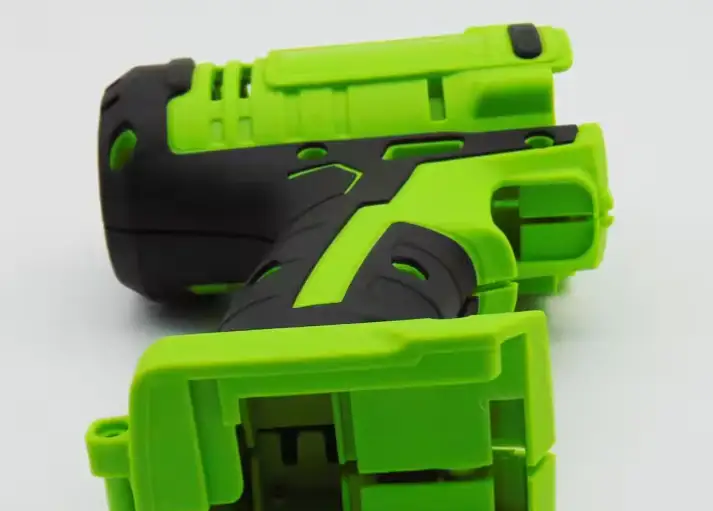
Overmolding is a multi-step injection molding process where one material (the substrate) is molded first, and a second material is molded over or around it.
Typical overmolding combinations include:
- Plastic + rubber (TPE, TPU, silicone)
- Rigid plastic + soft-touch elastomer
- Plastic + plastic (two-shot molding)
- Metal insert + plastic overmold
The process creates parts with improved grip, sealing, shock absorption, insulation, and aesthetics.
Because overmolding involves multiple materials and multiple molding stages, its cost structure is more complex than single-shot injection molding.
Overview of Overmolding Cost Structure
Before diving deep, here is a simplified view of where overmolding costs come from:
| Cost Category | Typical Cost Share |
|---|---|
| Tooling | 30% – 50% |
| Materials | 20% – 35% |
| Labor & Production | 15% – 30% |
| Quality & Secondary Ops | 5% – 10% |
Actual percentages vary depending on part complexity, volume, material selection, and industry requirements.
Tooling Cost Breakdown for Overmolding
Tooling is usually the largest upfront cost in any overmolding project.
1. Number of Molds Required
Unlike standard injection molding, overmolding often requires two molds:
- Substrate mold – for the first-shot rigid part
- Overmold tool – for the second-shot material
In some cases, manufacturers use:
- Two separate molds (manual or robotic transfer)
- A single two-shot mold (rotary platen or index plate)
Each option affects cost differently.
Cost Comparison:
| Tooling Method | Upfront Cost | Production Efficiency |
|---|---|---|
| Two separate molds | Lower | Medium |
| Two-shot mold | Higher | High |
| Insert + overmold | Medium | Medium |
Two-shot molds can cost 30%–70% more than single-shot molds due to mechanical complexity.
2. Mold Complexity and Design Features
Overmolding tools require additional design elements such as:
- Precise material shut-off areas
- Overmold flow channels
- Mechanical bonding features (undercuts, grooves)
- Alignment features for second-shot accuracy
These features increase:
- Design hours
- CNC machining time
- Mold assembly complexity
A simple overmold tool may cost USD 8,000–15,000, while complex two-shot molds can exceed USD 40,000–80,000.
3. Tool Steel Selection
Tool steel choice impacts both initial cost and long-term durability.
Common options:
- P20 steel – lower cost, shorter lifespan
- H13 steel – higher cost, better wear resistance
- Stainless steel – required for medical or corrosive materials
Higher-grade steels increase tooling cost but reduce maintenance and replacement expenses over long production runs.
4. Mold Cavitation and Volume Planning
The number of cavities directly affects tooling cost.
- Single-cavity molds: lower upfront cost
- Multi-cavity molds: higher initial cost, lower per-part cost
Overmolding multi-cavity tools is more expensive than standard molds because material flow and bonding consistency must be controlled across all cavities.
Material Cost Breakdown in Overmolding
Material selection plays a major role in overmolding cost, often more than buyers expect.
1. Substrate Material Costs
The substrate is usually a rigid plastic such as:
- ABS
- PC
- Nylon (PA6, PA66)
- PBT
- PP
Material costs depend on:
- Resin type
- Brand vs generic
- Additives (glass fiber, flame retardants)
Typical substrate resin prices range from USD 1.5–4.0 per kg, but engineered or reinforced grades can go much higher.
2. Overmold Material Costs
The overmold layer often uses elastomers, which are generally more expensive.
Common overmolding materials include:
- TPE (Thermoplastic Elastomer)
- TPU (Thermoplastic Polyurethane)
- Silicone rubber (LSR)
- Soft PVC
Approximate material cost ranges:
| Material | Cost Range (USD/kg) |
|---|---|
| TPE | 3 – 6 |
| TPU | 4 – 8 |
| LSR Silicone | 8 – 15 |
| Medical-grade elastomers | 10 – 20 |
Material compatibility is critical. Incompatible materials may require:
- Special adhesive grades
- Surface treatment
- Mechanical interlocks
These factors further increase cost.
3. Scrap and Waste Considerations
Overmolding generates more waste than single-shot molding due to:
- Trial runs
- Material purging between shots
- Setup scrap
Soft materials like TPE and silicone often cannot be reground easily, increasing effective material cost.
4. Color, Texture, and Additives
Custom colors, soft-touch textures, and special additives add cost through:
- Color masterbatch charges
- Small-lot surcharges
- Material changeover downtime
For low-volume projects, color matching alone can add 5–10% to material cost.
Labor Cost Breakdown in Overmolding
Labor costs are higher for overmolding because the process is more complex and less forgiving.
1. Machine Setup and Changeover
Overmolding requires:
- Precise alignment of first-shot parts
- Temperature matching between materials
- Pressure and timing adjustments
Setup time is often 30–50% longer than standard injection molding, increasing labor hours per production run.
2. Manual vs Automated Part Transfer
There are two main ways to move the substrate into the overmold step:
Manual Transfer
- Lower equipment cost
- Higher labor cost
- Higher risk of inconsistency
Robotic or Automated Transfer
- Higher upfront investment
- Lower long-term labor cost
- Better repeatability
For low-volume projects, manual transfer is common. For high-volume production, automation becomes cost-effective.
3. Skilled Operator Requirements
Overmolding requires experienced technicians who understand:
- Material bonding behavior
- Shrinkage and warpage control
- Process troubleshooting
Skilled labor commands higher wages, especially for medical, automotive, or electronics applications.
4. Cycle Time Impact
Overmolding cycle times are longer due to:
- Two molding stages
- Cooling time differences
- Transfer delays
Longer cycle times mean fewer parts per hour, increasing labor and machine cost per part.
Quality Control and Secondary Cost Factors
Beyond tooling, materials, and labor, several hidden costs affect overmolding pricing.
1. Quality Inspection
Overmolded parts require inspection for:
- Delamination
- Incomplete bonding
- Flash or misalignment
- Cosmetic defects
This increases inspection time and QA labor.
2. Testing and Validation
Industries like medical and automotive require:
- Adhesion testing
- Thermal cycling
- Environmental stress testing
These activities add indirect costs that are often overlooked during initial quoting.
3. Secondary Operations
Some overmolded parts require:
- Trimming
- Post-curing (silicone)
- Assembly
- Surface finishing
Each additional step adds labor and handling cost.
Cost Comparison: Overmolding vs Alternative Processes
It’s important to compare overmolding against alternatives.
| Process | Upfront Cost | Per-Part Cost | Performance |
|---|---|---|---|
| Overmolding | High | Medium | Excellent |
| Adhesive bonding | Low | High | Medium |
| Mechanical assembly | Medium | High | Medium |
| Single-shot molding | Low | Low | Limited |
While overmolding costs more initially, it often reduces:
- Assembly labor
- Part count
- Failure rates
This leads to lower total cost of ownership over the product lifecycle.
How to Reduce Overmolding Costs
1. Optimize Part Design Early
Design for overmolding by:
- Using mechanical bonding features instead of adhesives
- Minimizing overmold thickness
- Avoiding unnecessary undercuts
Early DFM reviews can reduce tooling rework and scrap.
2. Choose Compatible Materials
Select material pairs that naturally bond without primers or treatments. This reduces material and processing costs.
3. Match Tooling to Volume
Avoid over-engineering tooling for low-volume projects. A simpler two-mold setup may be more economical than a complex two-shot tool.
4. Plan for Scalability
Start with manual transfer for prototyping and transition to automation as volume increases. This spreads investment over time.
5. Work With an Experienced Overmolding Supplier
An experienced manufacturer can:
- Recommend cost-effective materials
- Optimize mold design
- Reduce trial and error
Poor supplier experience often leads to hidden costs later.
Real-World Overmolding Cost Example
Example: Consumer Electronics Grip Component
- Annual volume: 100,000 units
- Substrate: ABS
- Overmold: TPE
Cost Breakdown:
- Tooling: USD 25,000
- Material cost per part: USD 0.45
- Labor & machine cost per part: USD 0.35
- Total per-part cost: USD 0.80
Compared to assembling two separate parts, overmolding reduced assembly labor by over 40% and improved product quality.
Final Thoughts on Overmolding Cost Breakdown
Overmolding is not cheap—but it is often cost-efficient when evaluated correctly.
Understanding the true cost drivers—tooling, materials, and labor—allows buyers to:
- Make informed design decisions
- Avoid unexpected expenses
- Achieve better long-term value
When designed and executed properly, overmolding delivers superior performance, reliability, and product differentiation that often outweighs its higher upfront cost.
If you are planning an overmolding project, a detailed cost breakdown at the design stage is the best investment you can make.