Consumer electronics manufacturing has evolved rapidly over the past decade. Devices are becoming thinner, lighter, smarter, and more durable, while users expect premium aesthetics and reliable performance. To meet these demands, manufacturers increasingly rely on overmolding as a core production technology.
From smartphones and wearables to smart home devices and handheld electronics, overmolding enables the integration of multiple materials, functions, and design features into a single component. It improves ergonomics, protects sensitive electronics, and enhances visual appeal—all while reducing part count and assembly complexity.
This article explores overmolding in consumer electronics manufacturing, covering design considerations, material selection, production processes, cost factors, and emerging trends shaping the industry.
What Is Overmolding?
Overmolding is an injection molding process where a second material is molded over a previously molded substrate. In consumer electronics, this typically involves:
- Rigid plastic substrates (ABS, PC, PC/ABS, nylon)
- Soft or flexible overmold materials (TPE, TPU, silicone)
The result is a single integrated part with structural strength and functional surface features such as soft-touch grip, sealing, shock absorption, or insulation.
Why Overmolding Is Widely Used in Consumer Electronics
Consumer electronics place unique demands on manufacturing processes. Overmolding addresses many of these challenges simultaneously.
Improved Ergonomics and User Experience
Soft-touch overmolded surfaces:
- Improve grip
- Reduce hand fatigue
- Enhance perceived product quality
These features are critical for handheld devices such as remote controls, game controllers, and portable tools.
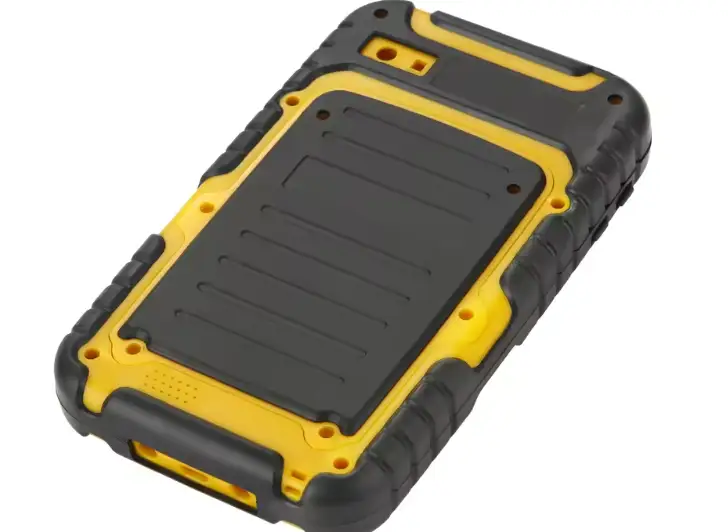
Protection of Sensitive Electronics
Overmolding provides:
- Shock absorption
- Vibration damping
- Environmental sealing
This protects internal components from drops, moisture, dust, and everyday wear.
Enhanced Aesthetics and Brand Differentiation
Overmolding allows:
- Multi-color designs
- Textured surfaces
- Seamless transitions between materials
Manufacturers can achieve premium aesthetics without secondary assembly or coatings.
Reduced Assembly and Lower Total Cost
By integrating multiple functions into one part, overmolding:
- Reduces part count
- Eliminates fasteners and adhesives
- Improves assembly efficiency
This leads to lower long-term production costs.
Common Consumer Electronics Applications of Overmolding
Overmolding is used across a wide range of consumer electronics products.
Smartphones and Mobile Devices
- Protective housings
- Button seals
- Shock-absorbing frames
Wearable Electronics
- Smartwatch housings
- Fitness tracker straps
- Medical-grade wearables
Audio and Video Devices
- Headphone housings
- Speaker enclosures
- Remote controls
Smart Home Products
- Thermostat housings
- Smart locks
- Sensors and controllers
Material Selection for Consumer Electronics Overmolding
Substrate Materials
Common substrate materials include:
- ABS
- PC
- PC/ABS blends
- Nylon (PA)
These materials offer strength, dimensional stability, and compatibility with overmolding elastomers.
Overmold Materials
Soft overmold materials typically include:
- TPE for soft-touch and comfort
- TPU for durability and abrasion resistance
- Silicone for high-temperature or skin-contact applications
Material choice depends on:
- Performance requirements
- Environmental exposure
- Regulatory considerations
Material Bonding Compatibility
Strong bonding between substrate and overmold is essential. Designers often select materials with natural chemical affinity to reduce the need for primers or adhesives.
Design Considerations for Consumer Electronics Overmolding
Wall Thickness Control
Uniform wall thickness ensures:
- Even cooling
- Reduced warpage
- Consistent bonding
Thin electronics housings often require precise thickness control.
Radii and Edge Design
Rounded edges:
- Improve material flow
- Reduce stress concentration
- Enhance cosmetic quality
Sharp edges are avoided in consumer-facing products.
Draft Angles and Mold Release
Adequate draft is critical to:
- Protect soft overmold materials
- Ensure clean ejection
- Maintain surface quality
Manufacturing Processes Used in Consumer Electronics Overmolding
In consumer electronics manufacturing, overmolding is typically achieved through two primary processes: two-shot overmolding and insert overmolding. Each method offers distinct advantages depending on production volume, design complexity, and cost requirements. Understanding how these processes differ helps manufacturers select the most efficient and reliable solution for their products.
Two-Shot Overmolding
Two-shot overmolding, also known as dual-shot or multi-shot molding, involves injecting two different materials sequentially within a single molding cycle using a specialized injection molding machine. The first material forms the rigid substrate, and the second material is injected directly over or around it while the part remains inside the mold.
This process creates a strong and consistent bond between materials because the second shot is molded onto a still-warm substrate. As a result, two-shot overmolding delivers excellent adhesion, high dimensional accuracy, and superior cosmetic quality—making it ideal for premium consumer electronics.
One of the key advantages of two-shot overmolding is high production efficiency. Because both materials are molded in a single automated cycle, the process minimizes handling, reduces labor requirements, and eliminates the need for secondary assembly. This leads to consistent part quality and reduced cycle times.
However, two-shot overmolding typically requires higher upfront tooling investment and more complex machinery. For this reason, it is most commonly used in high-volume consumer electronics production, such as smartphone components, wearable housings, remote controls, and smart device enclosures, where unit cost reduction over large quantities justifies the initial expense.
Insert Overmolding
Insert overmolding is a more flexible manufacturing approach in which the rigid substrate is molded separately and then placed into a second mold for the overmolding process. The soft or functional material is injected over the pre-molded insert to form the final component.
This method offers lower tooling costs and greater design adaptability, making it well-suited for projects with evolving designs or shorter product lifecycles. Insert overmolding also allows manufacturers to use existing molds for substrates, reducing development time and investment.
While insert overmolding involves additional handling steps and may have slightly longer cycle times, it remains an excellent solution for low- to medium-volume consumer electronics production, prototyping, and customized components where flexibility and cost control are priorities.
Both processes play a critical role in consumer electronics overmolding, and the right choice depends on production scale, design requirements, and long-term manufacturing goals.
Quality and Reliability Requirements
Consumer electronics overmolding must meet strict quality standards.
Mechanical and Environmental Testing
Typical tests include:
- Drop testing
- Thermal cycling
- Moisture resistance testing
Cosmetic Quality Control
Visible surfaces require:
- Consistent color
- Clean bonding lines
- No flash or flow marks
Quality inspection is especially critical for premium products.
Cost Considerations in Consumer Electronics Overmolding
Key cost drivers include:
- Tooling complexity
- Material selection
- Production volume
- Automation level
While tooling costs are higher initially, overmolding often reduces overall cost by eliminating secondary assembly.
Sustainability in Consumer Electronics Overmolding
Use of Sustainable Materials
Manufacturers increasingly use:
- Bio-based TPE
- Recycled plastics
- Material-compatible systems
These choices support sustainability goals without sacrificing performance.
Design for Recyclability
Designing overmolded parts with compatible materials improves end-of-life recycling options.
Industry Challenges and Solutions
Miniaturization
As devices become smaller:
- Wall thickness decreases
- Tolerances tighten
- Process control becomes critical
Advanced tooling and automation address these challenges.
Rapid Product Cycles
Short product lifecycles require:
- Fast tooling
- Flexible manufacturing
- Scalable production strategies
Overmolding supports rapid innovation.
Future Trends in Consumer Electronics Overmolding
Key trends include:
- Smart manufacturing and automation
- Multi-material functional integration
- Sustainable material adoption
- Increased use of two-shot molding
Overmolding will continue to evolve alongside consumer electronics innovation.
Best Practices for Successful Consumer Electronics Overmolding
- Involve overmolding experts early in design
- Select compatible materials
- Optimize geometry for moldability
- Validate performance through testing
These steps reduce risk and improve product success.
Final Thoughts: The Role of Overmolding in Consumer Electronics Manufacturing
Overmolding has become an essential technology in consumer electronics manufacturing.
By enabling multi-material integration, enhanced user experience, and improved durability, overmolding helps manufacturers meet rising market expectations while controlling cost and complexity.
As devices continue to evolve, overmolding will remain a key enabler of innovation in the consumer electronics industry.